If you’re looking for a natural, non-invasive way to relieve pain, improve mobility, or recover from an injury, you’ve likely come across chiropractic care and Pulsed Electromagnetic Field (PEMF) therapy.
Both treatments are widely used in musculoskeletal care and rehabilitation, but they work in very different ways.
A common question patients ask is:
“Should I choose chiropractic care or PEMF therapy?”
The answer depends on your diagnosis, your symptoms, and your goals. In many cases, the best option isn’t choosing one over the other—it’s using both together as part of a personalized treatment plan.
In this guide, we’ll explain how chiropractic care and PEMF therapy work, compare their benefits, discuss when each may be appropriate, and explore why combining them often produces better outcomes.
Interested in learning more about PEMF? Visit our PEMF Therapy in Dallas page.
What Is Chiropractic Care?
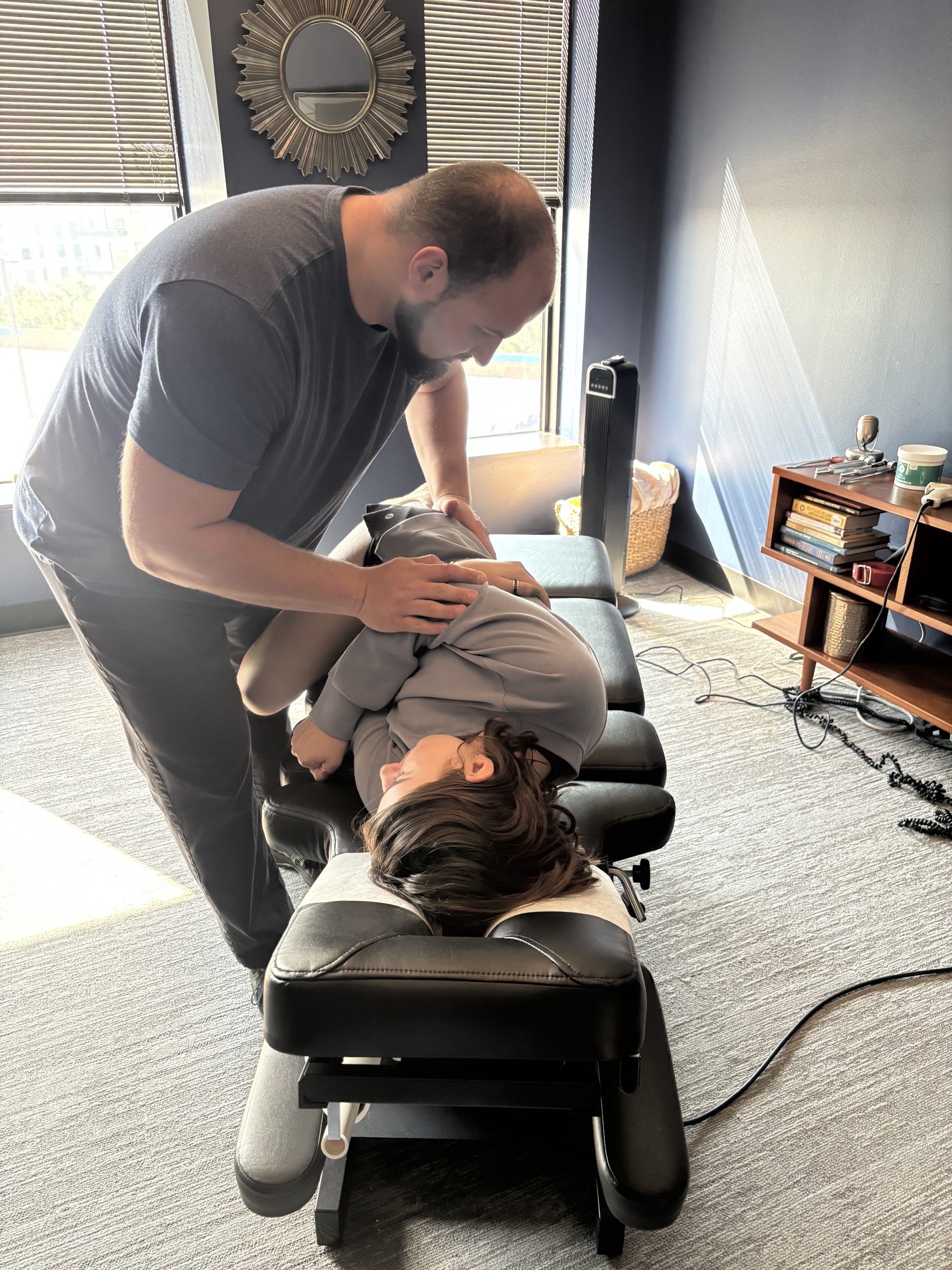
Chiropractic care is a healthcare profession focused on diagnosing and managing disorders of the musculoskeletal system, particularly the spine and joints.
The most recognized chiropractic procedure is the chiropractic adjustment, which involves applying a controlled force to a joint to improve motion and reduce restrictions.
Depending on your condition, chiropractic care may also include:
- Soft tissue therapy
- Corrective exercises
- Postural rehabilitation
- Ergonomic recommendations
- Lifestyle counseling
The goal is to restore movement, improve function, and help patients move with less pain.
Learn more about Chiropractic Care in Dallas.
What Is PEMF Therapy?
PEMF stands for Pulsed Electromagnetic Field Therapy.
Rather than manually treating joints, PEMF uses pulsed electromagnetic fields to interact with the body’s natural electrical activity.
Researchers continue studying PEMF for its potential role in supporting:
- Cellular signaling
- Recovery
- Bone healing
- Circulation
- Joint function
- Exercise recovery
PEMF therapy is completely non-invasive and typically involves relaxing on or near a treatment device for 15–30 minutes.
Read our complete guide on What Is PEMF Therapy?.
The Biggest Difference
Although both therapies are conservative and drug-free, they target different aspects of recovery.
Chiropractic Care
Focuses on:
- Joint motion
- Spinal biomechanics
- Nervous system function
- Movement quality
- Musculoskeletal mechanics
PEMF Therapy
Focuses on:
- Cellular electrical activity
- Recovery support
- Tissue healing
- Circulation
- Cellular communication
Think of it this way:
- Chiropractic care primarily addresses how your body moves.
- PEMF therapy primarily supports how your tissues recover.
How Chiropractic Care Works
When joints lose normal movement due to injury, poor posture, repetitive stress, or other factors, surrounding muscles, ligaments, and nerves may also be affected.
Chiropractic adjustments aim to restore joint mobility through controlled manual techniques.
Many treatment plans also include:
- Mobility exercises
- Strengthening
- Stretching
- Soft tissue therapy
- Home exercises
This comprehensive approach helps improve function while addressing contributing factors.
How PEMF Therapy Works
PEMF therapy works differently.
Instead of manually moving joints, PEMF devices generate pulsed magnetic fields that pass through the body’s tissues.
These fields induce tiny electrical currents that researchers believe may influence:
- Cell membrane function
- Cellular communication
- Blood flow
- Tissue recovery
- Bone remodeling
- Cellular energy production
Research into these mechanisms continues to evolve.
Learn more in How Does PEMF Therapy Work?.
Chiropractic vs PEMF for Back Pain
Back pain is one of the most common reasons people seek conservative care.
Chiropractic care may be particularly beneficial when back pain is associated with:
- Joint restrictions
- Spinal dysfunction
- Mechanical low back pain
- Reduced mobility
PEMF therapy may complement treatment by supporting:
- Recovery
- Muscle relaxation
- Tissue healing
- Rehabilitation
Rather than replacing chiropractic adjustments, PEMF is often used alongside them.
Learn more about Back Pain Treatment.
Chiropractic vs PEMF for Neck Pain
Patients experiencing neck pain often have multiple contributing factors, including joint dysfunction, muscle tension, poor posture, and repetitive strain.
Chiropractic care addresses movement restrictions, while PEMF therapy may support recovery of the surrounding tissues. This combination is part of a neck pain treatment that can help you recover faster.
Using both therapies together allows providers to address multiple components of the condition.
Which Is Better for Athletes?
Athletes commonly benefit from both treatments.
Chiropractic Care
Often helps optimize:
- Movement
- Mobility
- Joint mechanics
- Performance
PEMF Therapy
Often supports:
- Recovery
- Exercise tolerance
- Rehabilitation
- Passive recovery between training sessions
Professional athletes frequently incorporate both into their performance programs.
Learn more about Athletic Recovery.
Can You Combine Chiropractic Care and PEMF?
Absolutely.
At Aspire Health Clinic, combining therapies is common because each serves a different purpose.
A treatment plan may include:
- Chiropractic adjustments
- PEMF therapy
- Massage therapy
- Spinal decompression
- Corrective exercise
- Functional nutrition
- HOCATT Sauna
By combining therapies, patients may receive more comprehensive care than relying on any single treatment.
Benefits of Combining Chiropractic Care with PEMF
Patients often appreciate that this combination:
- Remains completely non-invasive
- Requires little or no downtime
- Addresses both movement and recovery
- Can be customized
- Fits into broader rehabilitation plans
While results vary by individual, this integrated approach aligns with the clinic’s focus on treating underlying contributors rather than only symptoms.
When Should You Choose Chiropractic Care?
Chiropractic care may be appropriate if you’re experiencing:
- Restricted joint movement
- Mechanical neck pain
- Mechanical back pain
- Spinal dysfunction
- Postural problems
- Reduced mobility
An evaluation by a chiropractor can help determine whether joint-based treatment is appropriate.
When Should You Choose PEMF Therapy?
PEMF therapy may be considered when the goal is to support:
- Recovery
- Tissue healing
- Rehabilitation
- Athletic recovery
- Conservative musculoskeletal care
PEMF is often most effective as part of a broader treatment plan rather than as a stand-alone intervention.
Why Aspire Health Clinic Combines Both
Our philosophy is simple:
Instead of asking “PEMF or chiropractic?”, we ask:
“What combination of treatments gives this patient the best opportunity to recover?”
Every patient receives an individualized evaluation before recommendations are made.
Depending on your diagnosis, your care plan may include:
- Chiropractic adjustments
- PEMF therapy
- Massage therapy
- Functional rehabilitation
- Spinal decompression
- Functional nutrition
- HOCATT® sauna therapy
This allows us to personalize care rather than applying the same treatment to everyone.
Frequently Asked Questions
Neither treatment is universally better. They work through different mechanisms and are often complementary.
Yes. Many patients receive both treatments during the same visit as part of a personalized care plan.
No. PEMF therapy does not restore joint motion through manual treatment. Instead, it supports recovery and is commonly used alongside chiropractic care.
Many athletes benefit from both. Chiropractic care helps optimize movement, while PEMF therapy may support recovery between training sessions.
Many patients with chronic musculoskeletal conditions receive both therapies as part of a comprehensive treatment plan. The most appropriate approach depends on the individual’s diagnosis and health history.
Conclusion
Chiropractic care and PEMF therapy are not competing treatments—they’re complementary tools that address different aspects of musculoskeletal health.
Chiropractic care focuses on restoring movement and improving joint mechanics, while PEMF therapy supports recovery at the cellular level. When combined thoughtfully, these therapies can play an important role in comprehensive, non-invasive care.
At Aspire Health Clinic, treatment recommendations are based on your diagnosis, goals, and overall health—not a one-size-fits-all protocol.
If you’d like to learn whether chiropractic care, PEMF therapy, or a combination of both is right for you, visit our PEMF Therapy in Dallas page or schedule a consultation.